
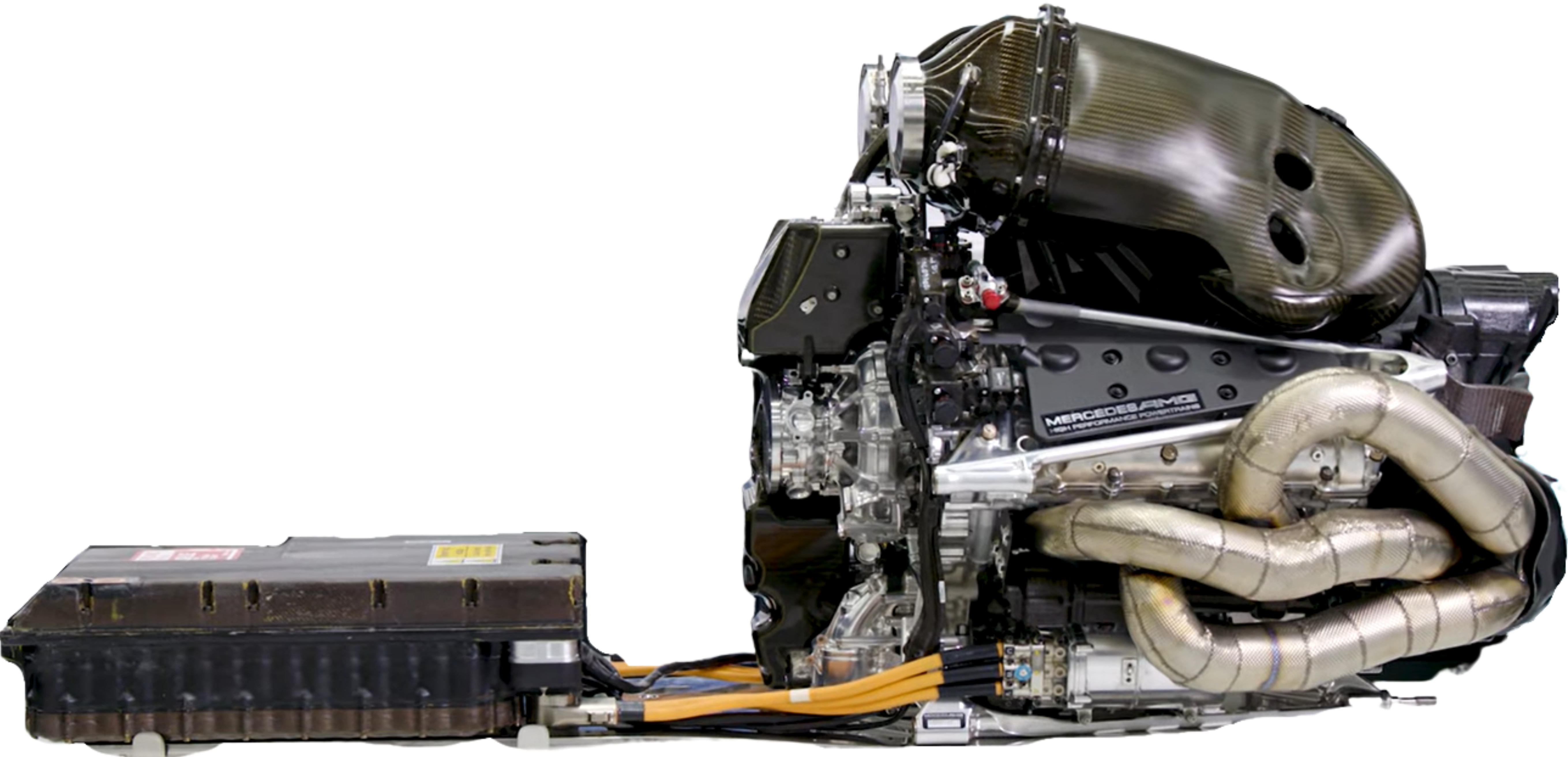
A typical engine works using a 4-stroke cycle; Intake, Compression, Power, and Exhaust. Nowadays, F1 cars are still powered by engines using the same principles, but are accompanied by advanced technology to get the most out of current technological capacities. Nowadays, these units in an F1 car are called Power Units. They are hybrids; part combustion and part electric. Aside from an internal combustion engine, it also utilizes electric motors powered by a system called ERS (Energy Recovery System). These power units produce around 1,000 horsepower , with the engine revving at around 15,000 rpm (revolutions per minute). To compare, an average road car has around 100 horsepower with an engine revving to a maximum of around 6000 rpm.

F1 uses a wide set of tires, with their key differences being their hardness and weather condition. Typically, drivers replace these tires at least once per race, which is called a pit stop. Here's the list of F1 tires:
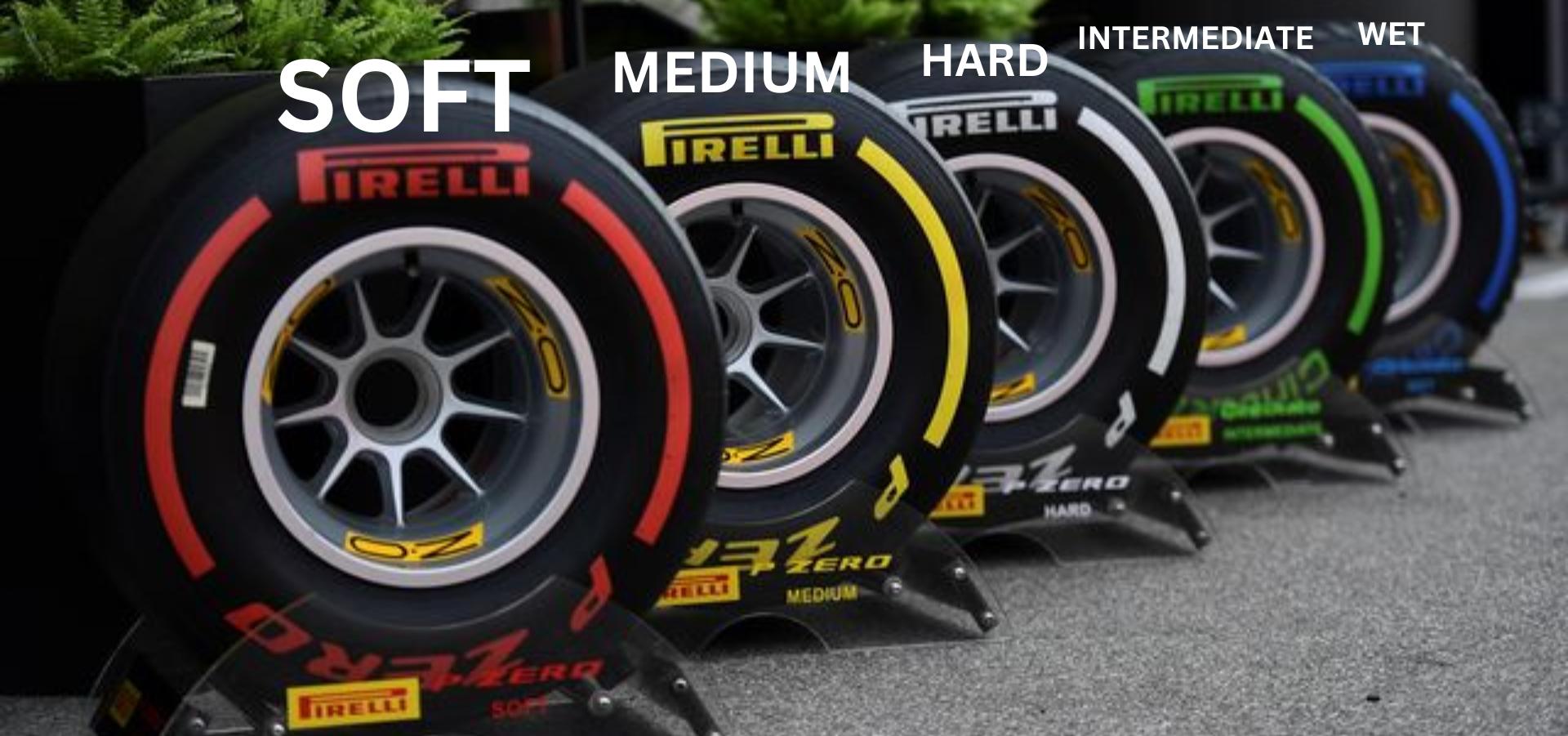
From Softs to Hards, the grip decreases but durability increases due to more tire pressure in the latter. There are also specialized tire types of Intermediates and Wets for particular weather conditions.
A large variety of bodywork and aerodynamic features are utilized for maximum speed. One of the most famous systems in relation to F1 aerodynamics is the DRS or Drag Reduction System.
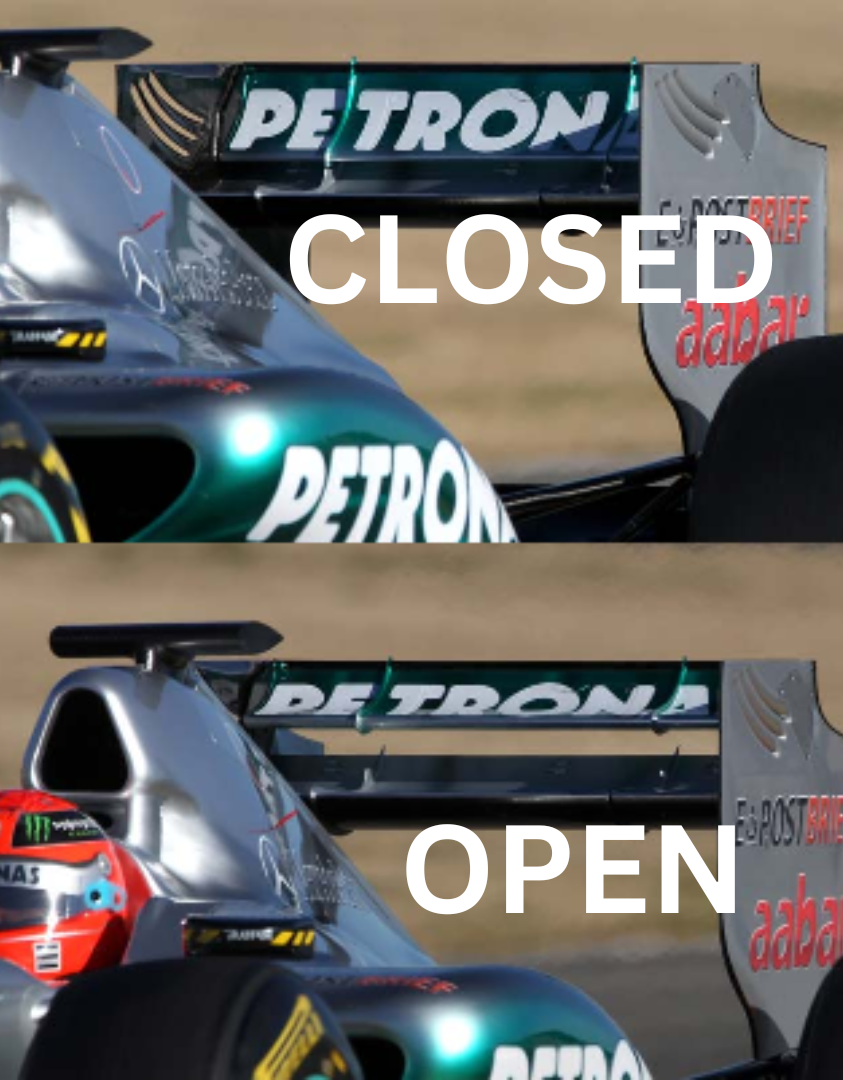
The wing of an F1 car can open or close to increase top speed or increase grip, respectively. It is typically open in straights where the car does not require the extra downforce, which in that scenario just hinders it. It closes again when the grip is needed in the turns. Over the years, aerodynamic features of F1 cars have been improved to reduce "dirty air" to make the sport more fair and balanced for all competitors.
The power unit is the heart of an F1 car. It consists of the ICE, or Internal Combustion Engine, Turbos, Control Systems, and two Motor Generators for Kinetic and Heat energy. These systems and components work in unison to provide the driver immediate speed and precise control over and throttle and allocation. The MGU-K utilizes kinetic energy produced from braking and converts it to electrical energy . Meanwhile, the MGU-H uses excess energy used by the turbo to generate electrical energy. This electrical energy generated can be stored and used by the car for more speed.
Since F1 is a dangerous sport, many safety measures such as fireproof gear, protective clothing and engineering, and various regulations have been made to keep the sport as safe as possible. One of the most recent and notable steps in achieveing this was the halo. The halo is a component used to protect the driver in violent crashes, resembling a halo; hence its name. Since its implementation in 2016, it has saved the lives of numerous drivers. It is made from grade 5 titanium, the likes that are used for aerospace, covered in carbon fiber. It is considered the most sturdy part of an F1 car, and according to Mercedes, it is strong enough to hold up a whole school bus.
The current F1 steering wheel is very different from the usual rounded ones with a horn and a few buttons. Modern technology has evolved it into what it is now. The modern steering wheel for F1 consists of various buttons for basically anything the driver needs; brake balancing, DRS, differential settings, you name it.

The steering wheel on the left is 7-Time World Champion Lewis Hamilton's steering wheel for the 2019 season. The drivers are heavily involved in its development as each driver ideally has a personal preference in configuring the buttons and the ergonomics of the wheel.




 Official F1 Page